CITY & STUDENT LIFE

Understand Beijing before choosing a university

A practical study and living guide for international students — not a collection of slogans.

01 · City & study

The national capital: a dense centre of culture, policy and campus life

Beijing is China's political, cultural, international-exchange and science-and-technology-innovation centre. For international students this means a deep concentration of universities, museums, libraries, embassies and research institutes — but the city is vast, and campuses sit far apart. Most of the well-known universities cluster in Haidian in the northwest (the traditional university district), while others are spread across the city. When you choose a university, do not just look for “in Beijing”; check the actual campus, where you will live, and how you will commute each day.

  • Good fits: humanities, social sciences, law, international relations, traditional culture, and also strong science and engineering at its technical universities.
  • Choosing a university: confirm which campus actually teaches your program — do not judge by the university's main address alone.
  • Living here: the daily radius, commute time and budget differ sharply between central and suburban campuses.
Illustration of studying and living in Beijing
The city is large — the campus your program actually uses matters more than the word “Beijing”.
02 · Climate & packing

A continental monsoon climate: hot humid summers, cold dry winters

Spring is short, windy and dusty with big day–night temperature swings; summer is hot and humid with heavy rainfall; autumn is the most comfortable season, cool and clear; winter is cold and dry but indoor heating keeps buildings warm. Air quality varies by season — spring dust and occasional winter haze are worth preparing for.

What to packLayers, a warm winter coat, comfortable walking shoes, a reusable mask for dusty or hazy days, and sun protection for summer.

Beijing in autumn — golden ginkgo trees and what to pack
03 · Your first week

Sort the paperwork first, then start exploring

  1. Confirm where and when to register, as stated in your admission notice
  2. Check into your dormitory or complete accommodation registration
  3. Complete the document checks, medical examination and insurance your university requires
  4. Set up your campus card, SIM card, bank card and everyday payment apps
  5. Locate the campus clinic, the international student office and emergency contacts
03
04 · Daily life

Work out commuting, payments and food early

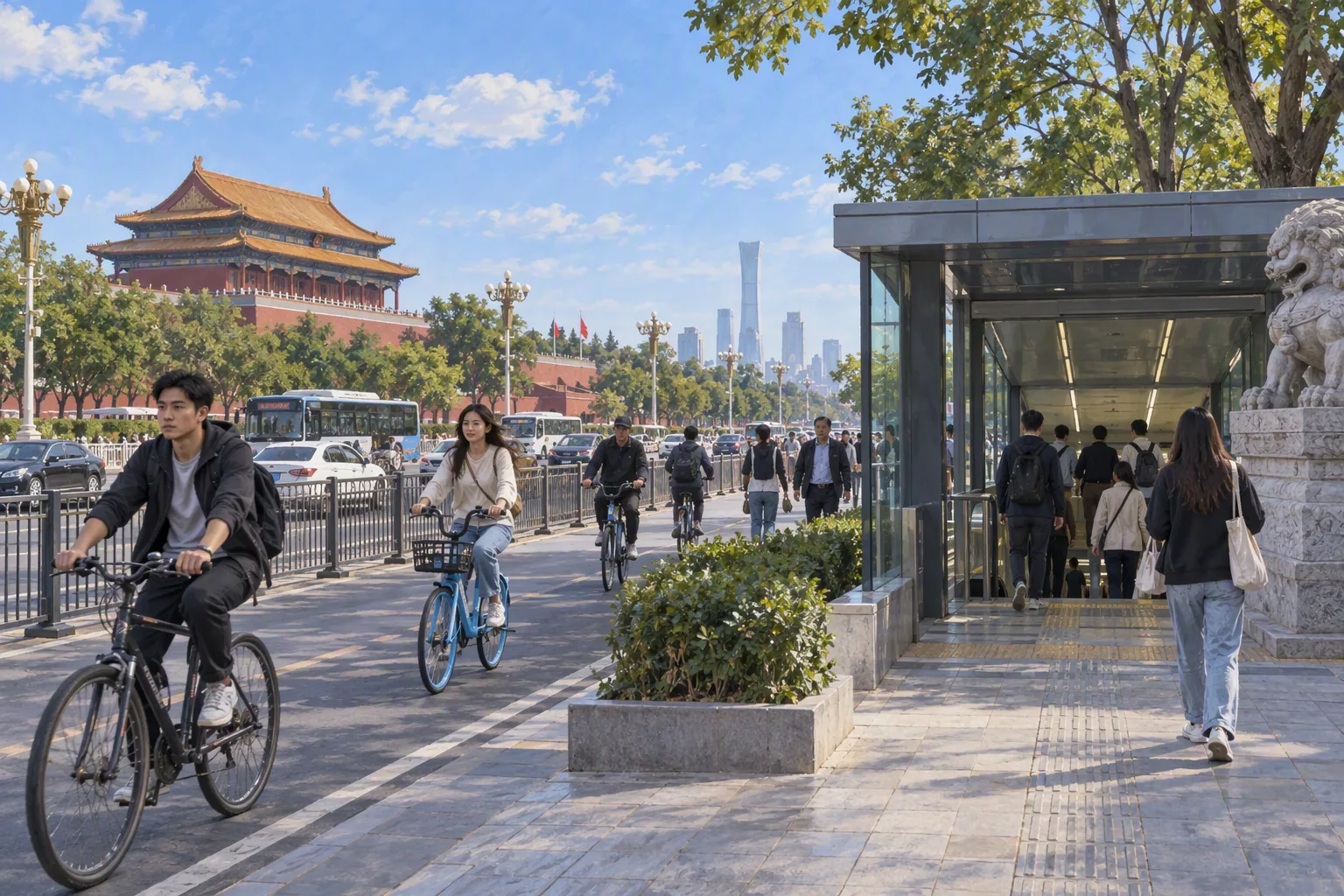
Beijing's subway network is extensive and reaches most university campuses, but cross-district commutes can still be long. After you arrive, find your nearest metro station, bus routes and how to get back at night. Campuses have canteens, convenience stores and food delivery; if you have dietary restrictions, check the campus restaurants and nearby options early.

First-week goalMake one independent commute, eat once on campus, do one supplies run, and save the university's key contacts.
Daily commute and student life in Beijing
05 · Budget & housing

Confirm your housing first, then work out monthly costs

On-campus places, room types and opening dates are arranged by the university. Once you are admitted, confirm quickly whether you need to apply for a dormitory separately. If you consider living off campus, factor in the deposit, commuting, internet, utilities and furniture.

Do not overlookDormitory application deadlines, move-in documents, off-campus accommodation registration, and whether you can stay during holidays.
05
06 · Culture & belonging

Beijing is an 800-year capital — learn its layers, not just its slogans

Beijing was the capital of the Jin, Yuan, Ming and Qing dynasties and is built around a Central Axis (中轴线) running north–south through the Bell and Drum Towers, the Forbidden City, Tiananmen and the Temple of Heaven — inscribed as a UNESCO World Heritage Site in 2024. That layout still shapes the city: the old hutongs (胡同) and siheyuan (四合院, courtyard homes) sit in the north and centre, while the ring roads and suburbs are modern. Reading the map this way helps you understand your campus and your commute.

What this means for youUniversity life in China is more formal than in many countries. Address teachers as “老师 (lǎoshī)” and older students as “学长 / 学姐 (xuézhǎng / xuéjiě)”; punctuality and preparation are noticed; open public criticism is rare, but “face” (面子, miànzi) matters, so feedback is often indirect — read between the lines. Classroom culture values respect for the teacher and quiet attentiveness; group work and plagiarism rules are taken seriously. Join a 社团 (club) or the 留学生办公室 (international student office) activities early: most of your classmates will be Chinese, and that is where friendships and daily-language practice actually happen.
Beijing hutongs and courtyard homes
07 · Food, faith & festivals

Eat widely, watch the calendar, respect the room

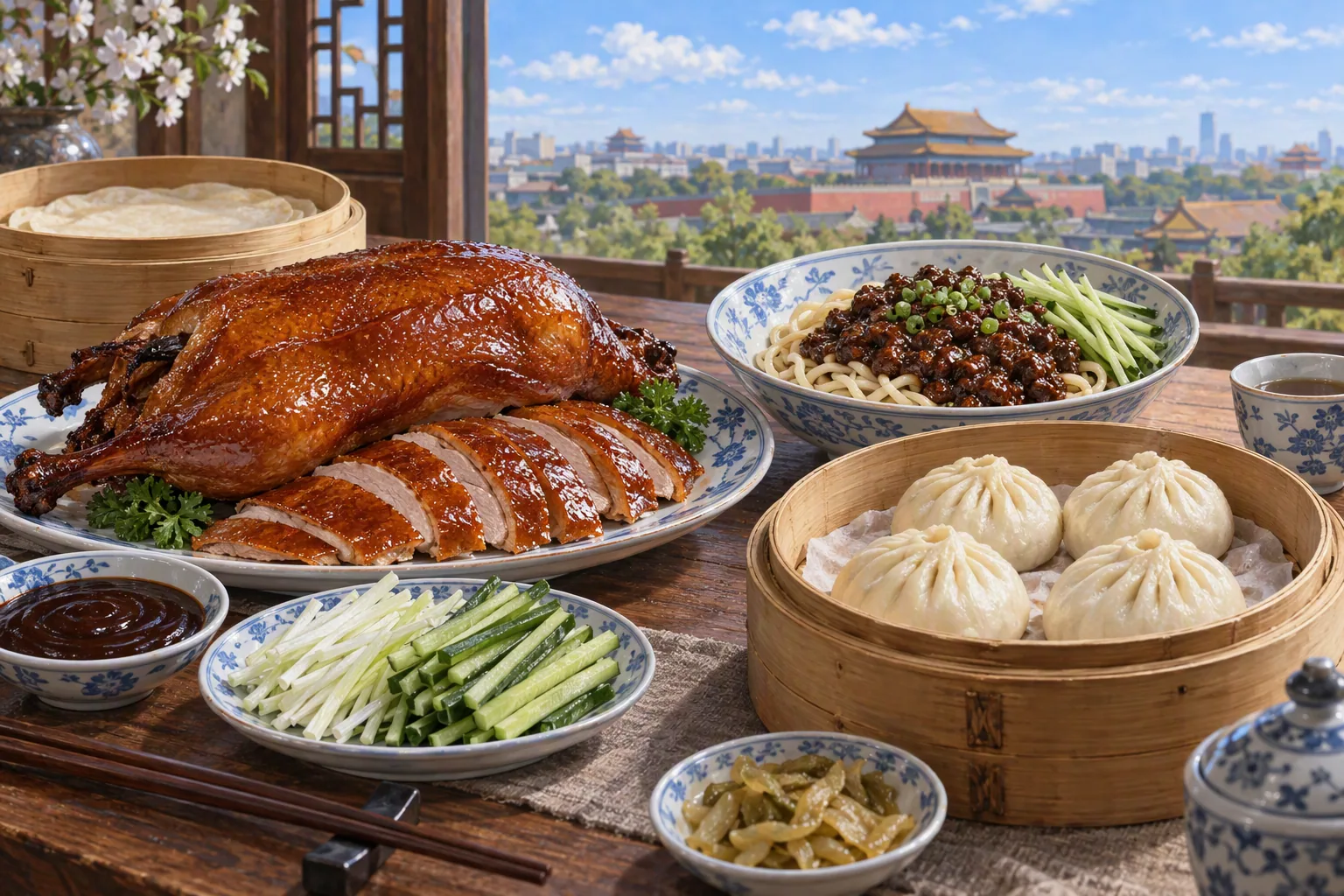
Beijing food is hearty and northern: 北京烤鸭 (Peking duck), 炸酱面 (zhájiàngmiàn, soybean-paste noodles), 涮羊肉 (mutton hotpot), and famous street snacks such as 豆汁 (dòuzhī, a fermented mung-bean drink — an acquired taste). Halal (清真) restaurants are plentiful, especially around Niujie (牛街) in the south; Buddhist-vegetarian and vegetarian options exist too. Campus canteens sell cheap set meals, and 美团 / 饿了么 deliver to the gate.

Festivals shape the whole academic year: 春节 (Spring Festival, usually late January–February) shuts campuses for weeks, so book travel home early; 国庆 (National Day, 1 October) brings a week-long holiday and very crowded trains; 中秋 (Mid-Autumn) and 端午 (Dragon Boat) are quieter. Freedom of belief is protected; temples such as 雍和宫 (Lama Temple) and 潭柘寺 (Tanzhe Temple) welcome respectful visitors. For any prayer or worship space, confirm arrangements with your international student office rather than assuming.

Beijing food: Peking duck and zhajiangmian
08 · Apps, money & safety

Set up the everyday toolkit in your first days

  • WeChat (微信) — chat and group notices, plus WeChat Pay; universities push announcements here and you scan to pay in canteens and taxis.
  • Alipay (支付宝) — Alipay Pay and transit codes for metro/bus; both apps now accept major international cards for visitors, but keep some cash as backup.
  • 高德地图 / 百度地图 (maps), 滴滴出行 (ride-hailing), 12306 (train tickets), 美团 / 饿了么 (food delivery).
Two rules that are law, not adviceIf you stay anywhere other than a registered hotel or your dorm, you must register your address with the local police station (派出所) within 24 hours of arrival. X1-visa holders must convert their visa to a student residence permit at the Beijing Exit–Entry Bureau within 30 days of entry. Keep a photo or scan of your passport, visa and admission notice on your phone. Emergency numbers: police 110, ambulance 120, fire 119, and the Beijing service hotline 12345.
08