CITY & STUDENT LIFE

Understand Changchun before choosing a university

A practical study and living guide for international students — not a collection of slogans.

01 · City & study

China's automotive capital, and a city built on education

Changchun (长春) is the capital of Jilin, on the rolling Songliao Plain of northeast China. It is a city with two very specific claims to fame: FAW (一汽), the state carmaker founded here in 1953 that built the first vehicles of the People's Republic, and Changchun Film Studio (长春电影制片厂), the cradle of New China's cinema. It is also unusually green for a northern industrial city — the "forest city" (森林城) belt of parks and tree-lined avenues is a real planning decision, not a slogan — and it is a student city, home to Jilin University, one of the largest comprehensive universities in the country.

  • Good fits: automotive and mechanical engineering, chemistry and materials, computer science, medicine, law, and teacher education (Jilin University and Northeast Normal University are the two anchors).
  • Choosing a university: Chaoyang (朝阳) holds Jilin University's main campus and much of the central city; Nanguan (南关) is the older central district; Jingyue (净月) is a newer development zone east of the centre where several large campuses sit beside a forest park.
  • Living here: the academic year is shaped by a long, cold winter and a short, hot summer. Changchun's universities are large and campus-centred, so a lot of student life happens inside the gates — which makes it important to pick a university whose campus you actually like.
Illustration of studying and living in Changchun
Changchun's wide green avenues and planned layout come from its 1950s industrial design — the city was drawn before it was built.
02 · Climate & packing

Long dry cold, short warm summer

Changchun has a continental monsoon climate with four sharply defined seasons. Winter runs from November to March with January averages around −15 °C and nights that fall below −25 °C; it is cold but notably dry and sunny, which makes it easier to live with than a damp coastal cold. Central heating (供暖) runs in homes and dormitories from roughly late October to mid-April. Summer (June–August) is short, warm and humid, around 22–23 °C with occasional hot spells; spring is brief, windy and dusty; autumn is short, clear and the best season of the year.

What to packA proper insulated winter coat, thermal layers, hat, gloves, scarf and warm waterproof boots — consider buying the heaviest items after you arrive, since local winter clothing is cheaper and warmer. Add a good moisturiser and lip balm for the dry winter air, and light summer clothes plus one rain jacket for the short wet season.

Changchun winter cold and what to pack
03 · Your first week

Sort the paperwork first, then learn the campus

  1. Confirm where and when to register, as stated in your admission notice
  2. Check into your dormitory or complete accommodation registration
  3. Complete the document checks, medical examination and insurance your university requires
  4. Set up your campus card, SIM card, bank card and everyday payment apps
  5. Locate the campus clinic, the international student office and emergency contacts
03
04 · Daily life

A big campus city with a clean, fast metro

Changchun's metro and light rail are modern, cheap and cover the main student districts, and Renmin Street (人民大街) — a long, straight north-south axis — is the spine everything else is measured from. Because the city is flat and the avenues are wide, buses and shared bikes are both genuinely useful. Campus life is central here: the universities are large, well-equipped and self-contained, and much of your week will happen inside them. For time off, Jingyuetan (净月潭) national forest park is the standard escape, Nanhu Park (南湖公园) is the central one, and the Auto Museum and Changying Century City (长影世纪城) explain the two industries the city is proud of.

First-week goalRide the metro along Renmin Street and back on your own, set up a metro QR code, eat once in a campus canteen, walk the whole campus once to find the clinic and the international office, and save their phone number.
Changchun metro, Renmin Street and campus student life
05 · Budget & housing

Confirm your housing first, then work out monthly costs

On-campus places, room types and opening dates are arranged by the university, and dormitories are heated — which matters a great deal in a Changchun winter. Off-campus rents are among the lowest of any major Chinese city, but confirm explicitly whether 供暖费 (heating costs) are included and how far the flat is from your campus gate, since Changchun's blocks are large and "next to the university" can still be a long walk. Once you are admitted, apply for a dormitory early if you want one.

Do not overlookDormitory application deadlines, move-in documents, off-campus accommodation registration, whether heating is included in the rent, and whether you can stay during holidays.
05
06 · Culture & belonging

An industrial city with a film studio and a difficult history

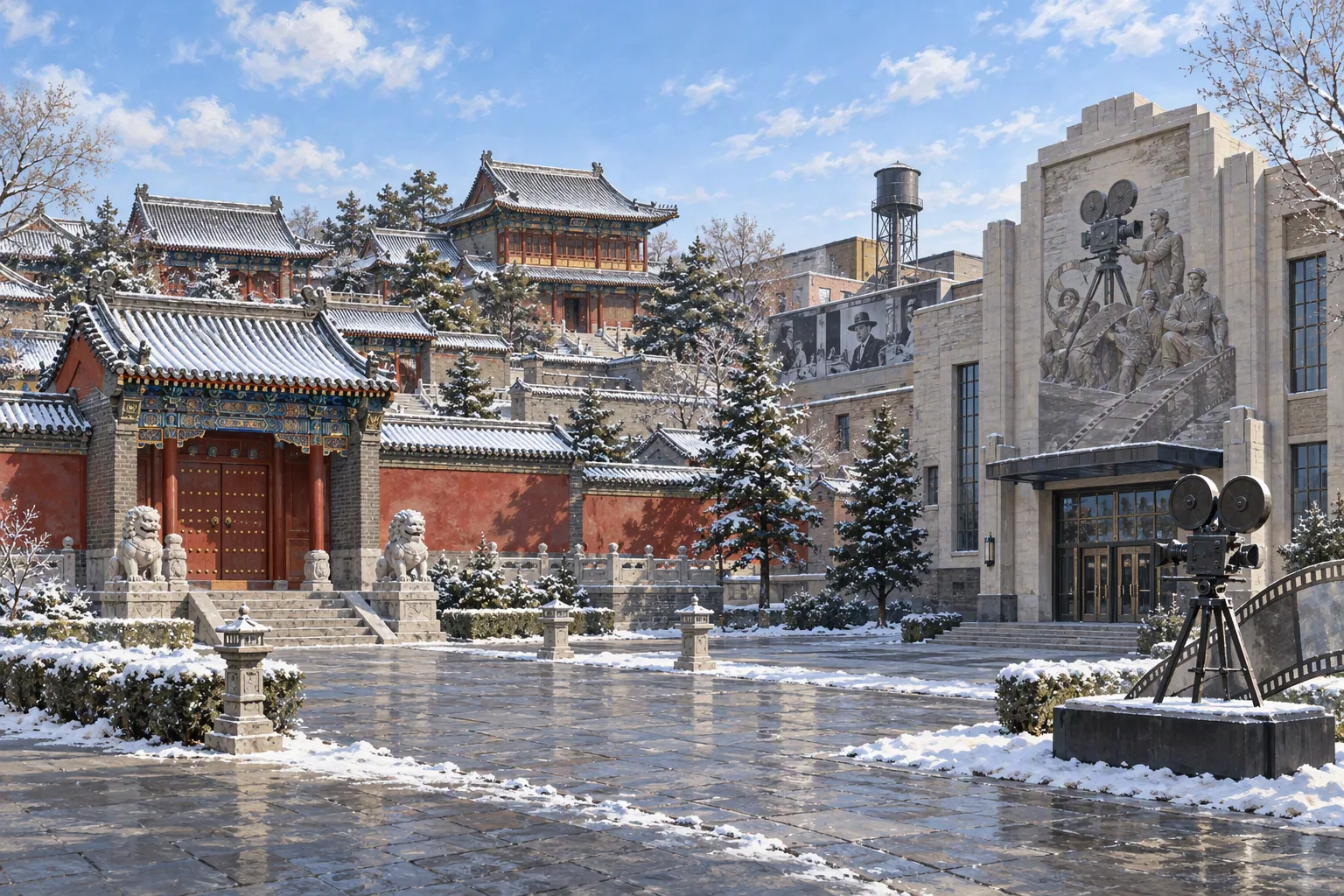
Changchun's identity was largely designed in the 1950s, when Soviet and Chinese planners laid out the city around heavy industry and the FAW plant — which is why it feels more ordered and more spacious than most Chinese cities of its size. Changchun Film Studio gave the country some of its earliest and most influential films, and the city still calls itself a film town. There is also a history here that international students should know rather than avoid: the Palace of the Puppet Emperor (伪满皇宫博物院) was the residence of Puyi during the Japanese occupation of Manchuria in the 1930s–40s, and it is now a museum that treats that period seriously. Local speech is Northeastern Mandarin (东北话), which is close to standard Mandarin and comparatively easy to follow.

What this means for youUniversity life in China is more formal than in many countries. Address teachers as "老师 (lǎoshī)" and older students as "学长 / 学姐 (xuézhǎng / xuéjiě)"; punctuality and preparation are noticed; open public criticism is rare, but "face" (面子, miànzi) matters, so feedback is often indirect. Join a 社团 (club) or the 留学生办公室 (international student office) activities early: most of your classmates will be Chinese, and that is where friendships and daily-language practice actually happen.
Changchun film studio heritage and green avenues
07 · Food, faith & festivals

Northeast comfort food, and a serious barbecue culture

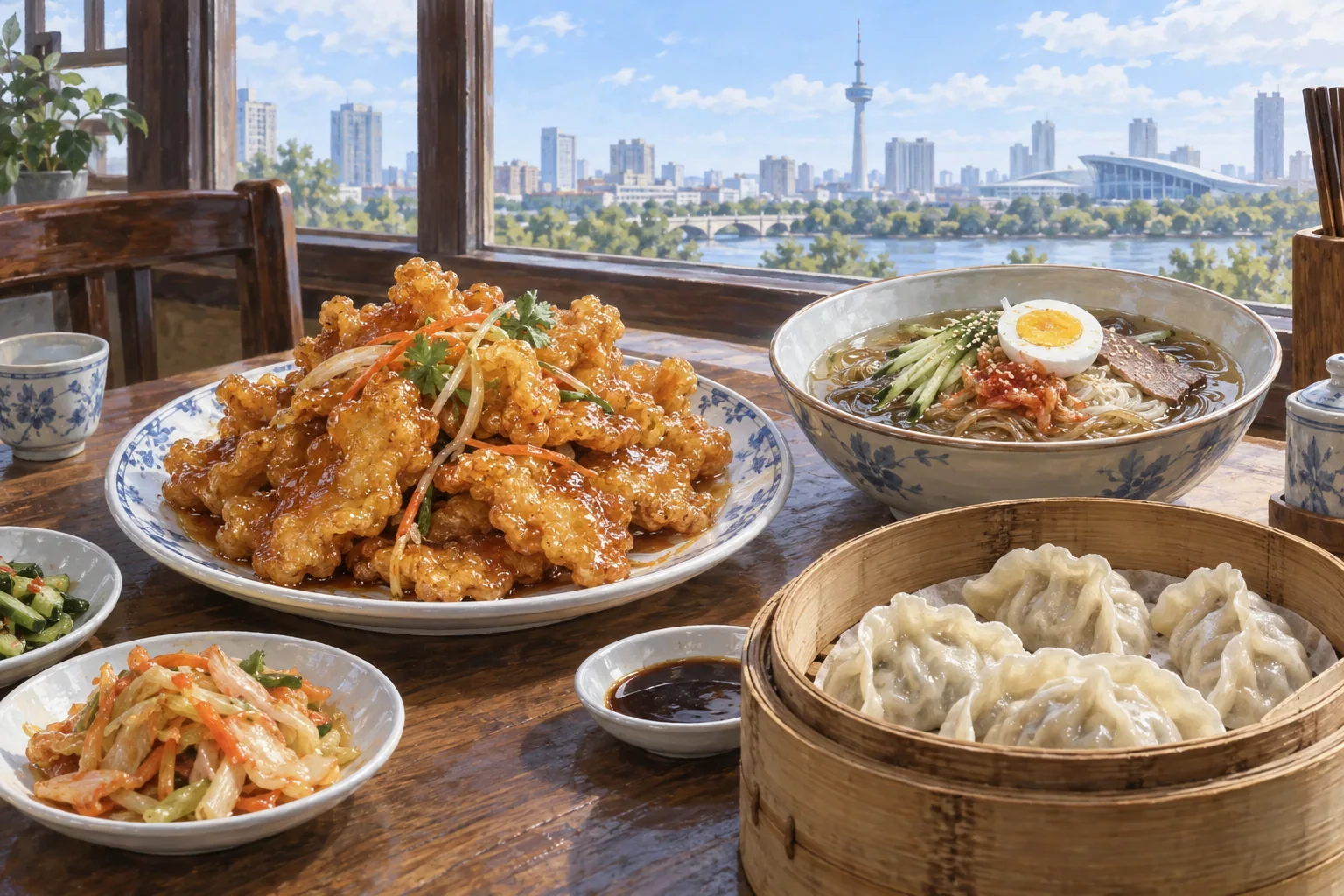
Changchun eats like the rest of the northeast, only more so. The local obsession is 烧烤 (shao kao, charcoal barbecue) — small skewers of meat, vegetables and tofu cooked at the table, and a standard student evening out. Alongside it you will find 锅包肉 (sweet-and-sour fried pork), 杀猪菜 (pork and sauerkraut stew), 酸菜白肉, 冷面 (cold noodles, a Korean-influenced favourite), 熏肉大饼 (smoked pork with flatbread) and, for dessert, 雪衣豆沙 and pastries from the old local bakery 鼎丰真. Portions are large and prices are low; campus canteens are very cheap. Halal (清真) restaurants are available around the city's mosques, and vegetarian options exist in canteens though you may need to ask.

Festivals shape the academic year: 春节 (Spring Festival, usually late January–February) shuts campuses for weeks, so book travel home early and expect heavy rail demand; 国庆 (National Day, 1 October) brings a week-long holiday; 中秋 (Mid-Autumn) and 端午 (Dragon Boat) are quieter. Changchun's own big dates are the summer film festival and the winter ice-and-snow season, when the parks and the ski slopes around the city fill up. Freedom of belief is protected; for any prayer or worship space, confirm arrangements with your international student office rather than assuming.

Changchun barbecue, guo bao rou and northeastern dishes
08 · Apps, money & safety

Set up the everyday toolkit in your first days

  • WeChat (微信) — chat and group notices, plus WeChat Pay; universities push announcements here and you scan to pay in canteens and taxis.
  • Alipay (支付宝) — Alipay Pay and transit codes for metro/bus; both apps accept major international cards for visitors, but keep some cash as backup.
  • 高德地图 / 百度地图 (maps), 滴滴出行 (ride-hailing), 12306 (train tickets — book early for Spring Festival), 美团 / 饿了么 (food delivery).
Two rules that are law, not adviceIf you stay anywhere other than a registered hotel or your dorm, you must register your address with the local police station (派出所) within 24 hours of arrival. X1-visa holders must convert their visa to a student residence permit at the Changchun Exit–Entry Bureau within 30 days of entry. Keep a photo or scan of your passport, visa and admission notice on your phone. In winter, cover exposed skin and watch for frostbite; the dry cold is easier to bear than damp cold, but it still bites. Emergency numbers: police 110, ambulance 120, fire 119, and the Changchun service hotline 12345.
08