02 · Climate & packing
Humid subtropical: brutal summers, damp grey winters
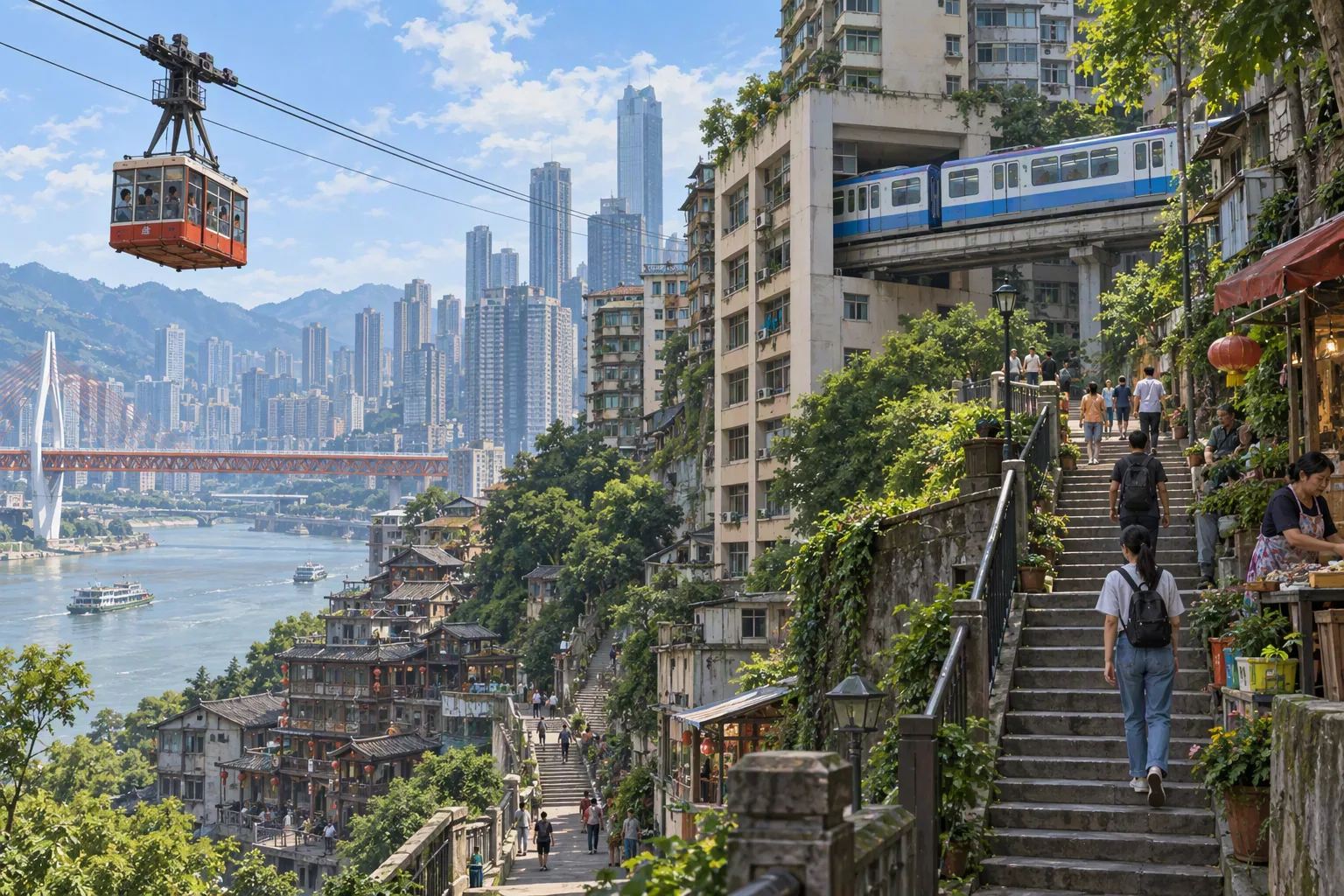
Chongqing has a humid subtropical monsoon climate, and it counts among China's traditional "three furnaces" (火炉). Summer (June–August) is long, extremely humid and often above 38 °C, with heat that lingers at night; the city also has one of the lowest sunshine totals of any major Chinese city, so the sun you get is intense but rare. Winter (December–February) is mild by temperature — usually 5–10 °C — but damp, overcast and foggy, which is why Chongqing is also called the "fog capital" (雾都). Spring and autumn are short and pleasant.
What to packLight, loose summer clothes and a real fan or portable cooler; breathable shoes you can walk stairs in; a warm layer and a waterproof coat for the damp winter; an umbrella you keep with you year-round; and medicine for humidity-related colds.