CITY & STUDENT LIFE

Understand Guangzhou before choosing a university

A practical study and living guide for international students — not a collection of slogans.

01 · City & study

A thousand-year trading city where "eat first" is the local philosophy

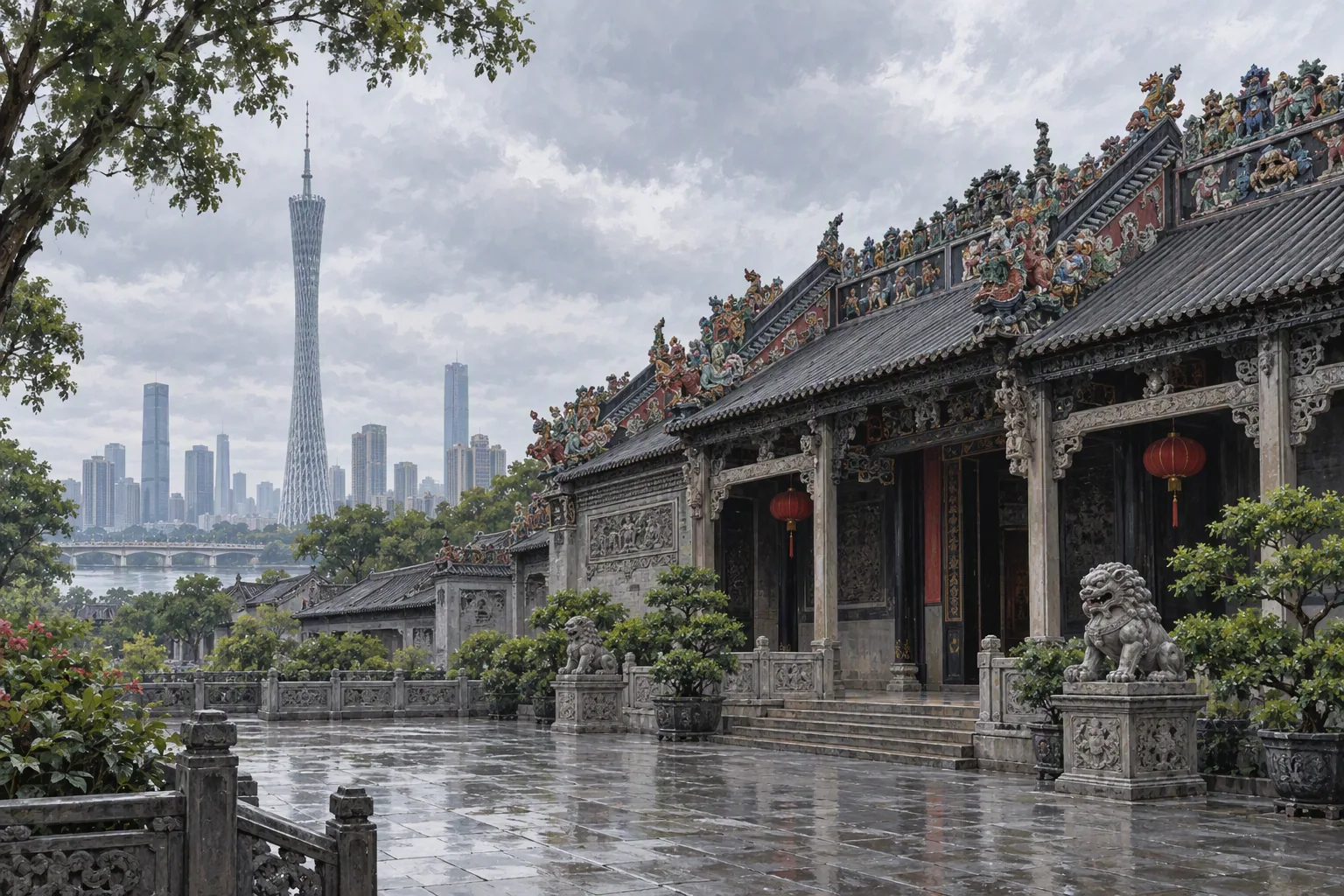
Guangzhou (广州) is the capital of Guangdong and one of China's oldest continuous trading ports — nicknamed the "City of Rams" (羊城) and the "thousand-year commercial capital" (千年商都). It is the heart of Cantonese (粤) culture: 饮茶 (yum cha) dim-sum mornings, 骑楼 (qilou) arcaded streets, and the 珠江 (Pearl River) waterfront. For students this means a warm, humid subtropical climate, a pragmatic and open business culture, and three strong universities spread across the Tianhe and Panyu districts (with Sun Yat-sen also running campuses in Zhuhai and Shenzhen).

  • Good fits: comprehensive medicine/business/humanities (Sun Yat-sen), engineering and an all-English international campus (SCUT), and China's most international student body plus a large English-taught portfolio (Jinan).
  • Choosing a university: confirm which campus actually teaches your program — Sun Yat-sen alone spans Guangzhou, Zhuhai and Shenzhen.
  • Living here: Cantonese is widely spoken; Mandarin works everywhere, but learning a few Cantonese phrases opens the local world.
Illustration of studying and living in Guangzhou
Guangzhou runs on trade and tea — a warm, open city where campus life meets Cantonese food culture.
02 · Climate & packing

A humid subtropical climate: long hot summers, mild winters, a typhoon season

Summers are long, hot and humid; winters are short and mild (rarely freezing); spring brings 回南天 (humid "returning-south" days) when walls sweat, and late spring to early summer brings the 梅雨 (plum-rain) season. Typhoons can hit from summer into early autumn. Air conditioning and a dehumidifier matter more than a heavy coat.

What to packLight breathable clothing, a strong umbrella, rain shoes, a small dehumidifier for dorm use, and sun protection. A light jacket covers the mild winter.

Guangzhou climate and what to pack
03 · Your first week

Sort the paperwork first, then start exploring

  1. Confirm where and when to register, as stated in your admission notice
  2. Check into your dormitory or complete accommodation registration
  3. Complete the document checks, medical examination and insurance your university requires
  4. Set up your campus card, SIM card, bank card and everyday payment apps
  5. Locate the campus clinic, the international student office and emergency contacts
03
04 · Daily life

Work out commuting, payments and food early

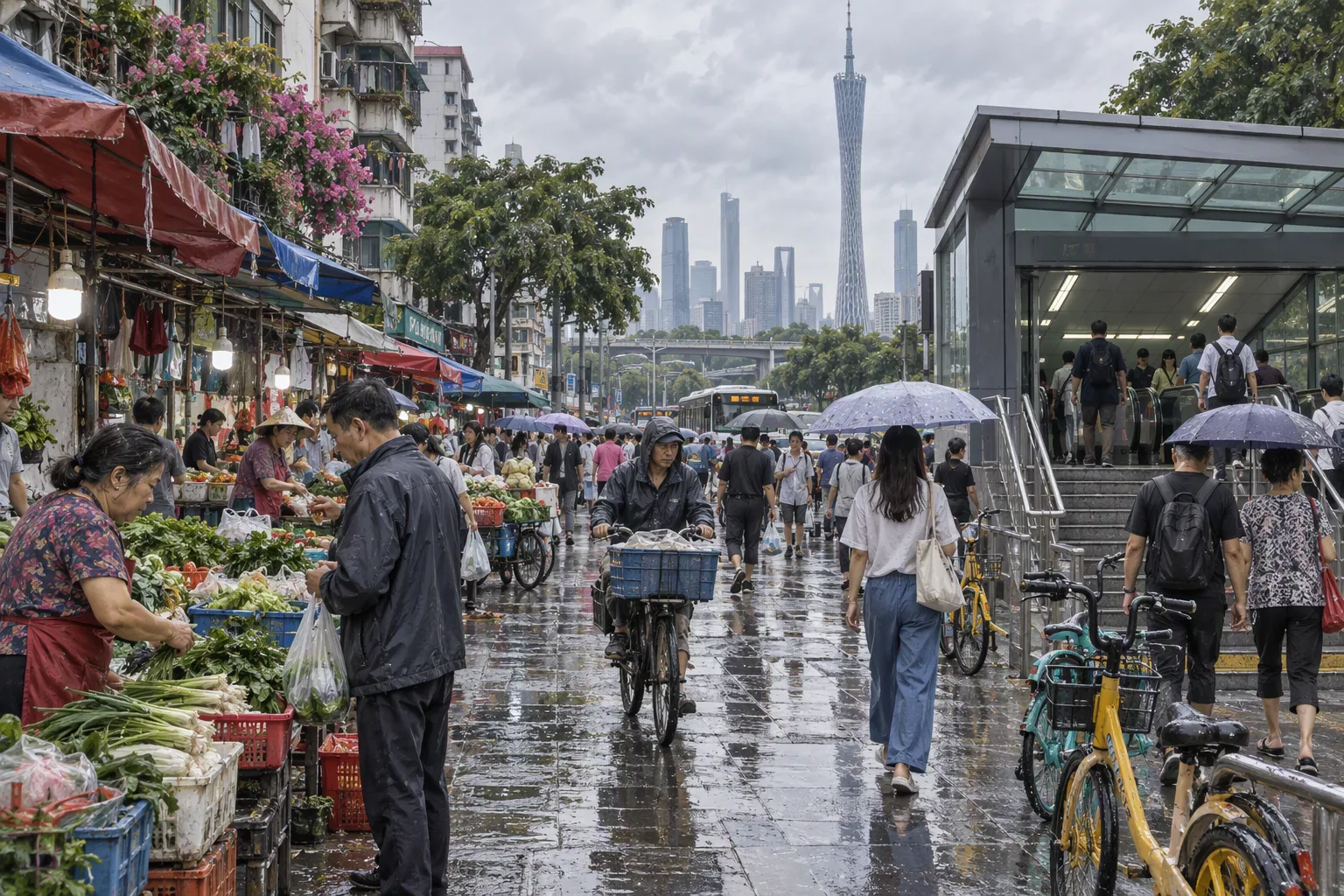
Guangzhou's metro is extensive and reaches all three university areas; buses and shared bikes cover the rest, and the Pearl River adds ferry options. 饮茶 dim-sum brunches, 茶餐厅 (Cha Chaan Teng) cafés and endless street food make eating out cheap and social. Campuses have canteens and delivery; if you keep halal or vegetarian, the city has long-standing Muslim and Buddhist-vegetarian options.

First-week goalMake one independent metro trip, try a dim-sum breakfast, do one supplies run, and save the university's key contacts.
Daily commute and student life in Guangzhou
05 · Budget & housing

Confirm your housing first, then work out monthly costs

On-campus places, room types and opening dates are arranged by the university. Once admitted, confirm quickly whether you need to apply for a dormitory separately. Guangzhou is moderate for cost of living — street food and canteens are cheap, while expat-favourite districts cost more. If you live off campus, factor in the deposit, commuting, internet, utilities and furniture.

Do not overlookDormitory application deadlines, move-in documents, off-campus accommodation registration, and whether you can stay during holidays.
05
06 · Culture & belonging

Cantonese culture is pragmatic, food-first, and proudly local

Guangzhou's identity is built on trade and food. 饮茶 (yum cha) is not just a meal but a way of doing business and keeping family close; 凉茶 (herbal tea) stalls are a daily health habit; and 粤语 (Cantonese) carries a culture of opera, films and humour distinct from the Mandarin north. People are commercially pragmatic and outward-looking — less concerned with "face" (面子) than with getting things done. University life is still formal: address teachers as "老师 (lǎoshī)" and older students as "学长 / 学姐".

What this means for youLearn a few Cantonese greetings (唔該 m̀h-gōi = "thanks", 食咗饭未? = "eaten yet?") — it signals respect for the local culture. Join a 社团 (club) and the 留学生办公室 activities; the city's open trading mindset makes it easy to meet people beyond campus.
Guangzhou Cantonese culture and qilou arcades
07 · Food, faith & festivals

"食在广州" — eating is the local pastime

Must-tries: 早茶 / 点心 (dim sum), 烧腊 (roast goose / pork), 肠粉 (cheung fun rice-noodle rolls), 艇仔粥 (boat congee), 双皮奶 (double-skin milk pudding), 牛杂 (beef offal stew) and 椰子 (coconut) desserts. Halal (清真) restaurants are well established — Guangzhou's 怀圣寺 (Huaisheng Mosque) is one of the oldest in China. Campus canteens are cheap; 美团 / 饿了么 deliver to the gate.

Festivals: the 春节迎春花市 (New Year flower markets) are a Guangzhou signature — the city fills with orchid and peach-blossom stalls; 端午 brings Pearl River dragon-boat races; 中秋 and 重阳 are observed quietly. Freedom of belief is protected; Buddhist and Taoist temples (光孝寺, 三元宫) and the mosque welcome respectful visitors — confirm worship arrangements with your international student office.

Guangzhou dim sum and Cantonese food
08 · Apps, money & safety

Set up the everyday toolkit in your first days

  • WeChat (微信) — chat and group notices, plus WeChat Pay; universities push announcements here and you scan to pay in canteens and taxis.
  • Alipay (支付宝) — Alipay Pay and transit codes for metro/bus; both apps now accept major international cards for visitors, but keep some cash as backup.
  • 高德地图 / 百度地图 (maps), 滴滴出行 (ride-hailing), 12306 (train tickets), 美团 / 饿了么 (food delivery), and the 广州地铁 app or 穗好办 for local services.
Two rules that are law, not adviceIf you stay anywhere other than a registered hotel or your dorm, register your address with the local police station (派出所) within 24 hours of arrival. X1-visa holders must convert their visa to a student residence permit at the Guangzhou Exit–Entry Bureau within 30 days of entry. Keep a photo or scan of your passport, visa and admission notice on your phone. Emergency numbers: police 110, ambulance 120, fire 119, and the Guangzhou service hotline 12345.
08