CITY & STUDENT LIFE

Understand Nanjing before choosing a university

A practical study and living guide for international students — not a collection of slogans.

01 · City & study

An ancient southern capital wrapped in plane-tree shade

Nanjing (南京) is the capital of Jiangsu and was the seat of six dynasties and the Republican-era (民国) government — often called the "ancient capital of six dynasties" (六朝古都). Its character is 江南 (Jiangnan) elegance: 梧桐 (plane-tree) avenues, the 紫金山 (Purple Mountain), 玄武湖 (Xuanwu Lake) and the 秦淮河 (Qinhuai River). For students this means a scholarly, history-steeped city with three strong universities: Nanjing University (Gulou / Xianlin), Southeast University (Sipailou / Jiulonghu) and NUAA (Minggugong / Jiangjunlu).

  • Good fits: humanities and fundamental sciences (NJU), architecture/civil/EE and medicine (SEU), and aerospace and aeronautics (NUAA).
  • Choosing a university: campuses are spread across the city — NJU's Xianlin is far east, SEU's Jiulonghu is in Jiangning, so check your actual commute.
  • Living here: the city is greener and calmer than Beijing or Shanghai, with a strong student population.
Illustration of studying and living in Nanjing
Nanjing balances imperial history and student life — plane-tree boulevards, lakes, and three research universities.
02 · Climate & packing

A humid subtropical climate: hot humid summer, cold damp winter, a plum-rain season

Summers are hot and humid; winters are cold and damp with limited central heating in older buildings, so a warm layer matters indoors; 梅雨 (plum-rain) season in late spring / early summer is wet and muggy; autumn is the most comfortable, clear and crisp. The Yangtze River keeps humidity high year-round.

What to packA warm indoor layer for winter, a raincoat and shoes for 梅雨, dehumidifier for dorm use, and sun protection for summer.
Nanjing climate and what to pack
03 · Your first week

Sort the paperwork first, then start exploring

  1. Confirm where and when to register, as stated in your admission notice
  2. Check into your dormitory or complete accommodation registration
  3. Complete the document checks, medical examination and insurance your university requires
  4. Set up your campus card, SIM card, bank card and everyday payment apps
  5. Locate the campus clinic, the international student office and emergency contacts
03
04 · Daily life

Work out commuting, payments and food early

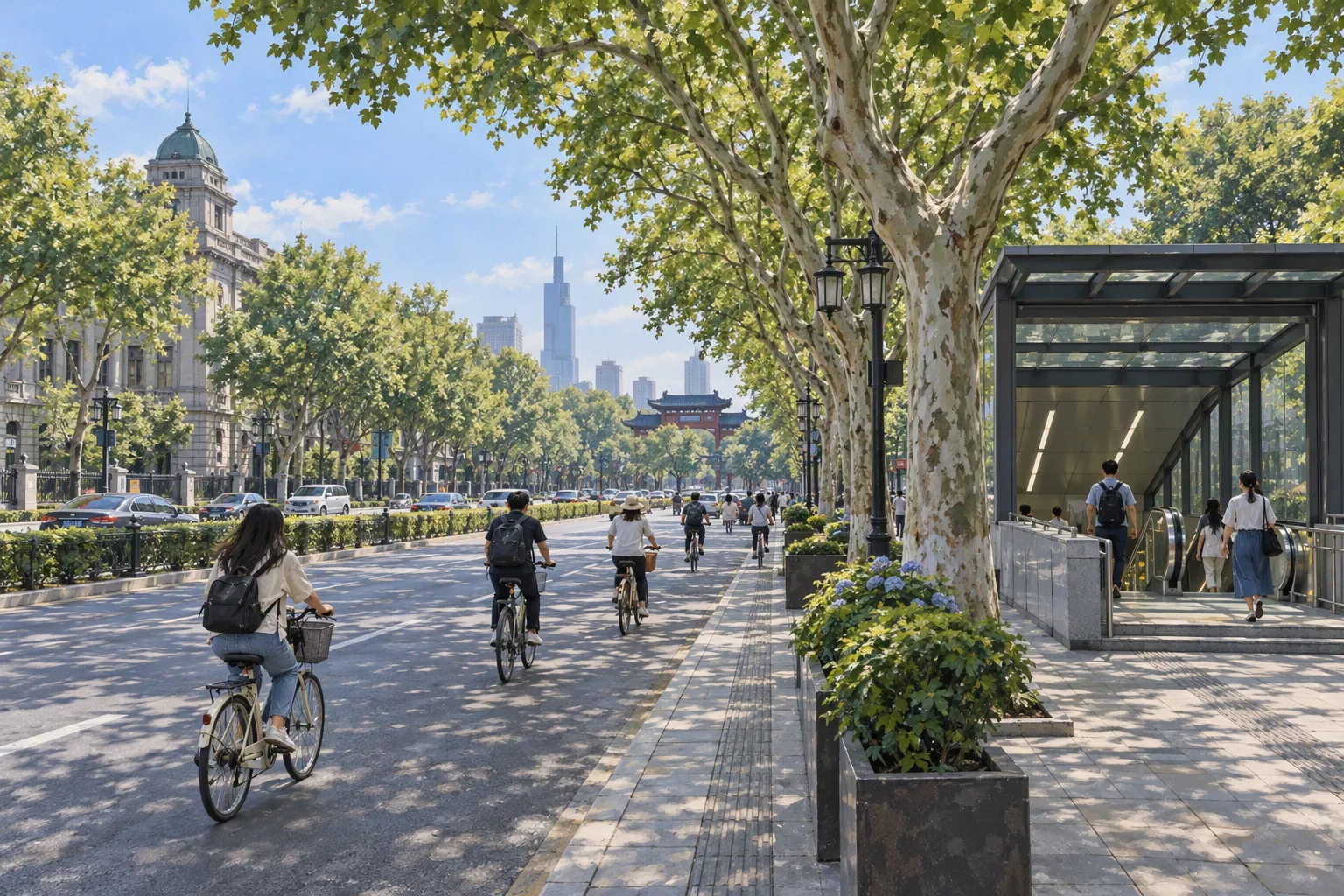
Nanjing's metro is well developed and links the campuses, the 紫金山 (Purple Mountain) scenic area and the Yangtze river crossings; buses and shared bikes fill gaps. The 夫子庙 (Confucius Temple) riverside, 玄武湖 (Xuanwu Lake) park and 1912 bar street are easy weekend spots. Campuses have canteens and delivery; if you have dietary restrictions, check campus restaurants and nearby options early.

First-week goalMake one independent metro trip, eat once on campus, do one supplies run, and save the university's key contacts.
Daily commute and student life in Nanjing
05 · Budget & housing

Confirm your housing first, then work out monthly costs

On-campus places, room types and opening dates are arranged by the university. Once admitted, confirm quickly whether you need to apply for a dormitory separately. Nanjing's cost of living is moderate — cheaper than Shanghai, similar to Tianjin. If you live off campus, factor in the deposit, commuting, internet, utilities and furniture.

Do not overlookDormitory application deadlines, move-in documents, off-campus accommodation registration, and whether you can stay during holidays.
05
06 · Culture & belonging

A city of scholarship and memory — read its layers with care

Nanjing's identity blends 江南 (Jiangnan) refinement with a sober awareness of history: the 民国 (Republican-era) architecture along 中山路, the 梧桐 (plane-tree) boulevards, and memorials such as the Nanjing Massacre Memorial Hall are part of the city's public memory — worth visiting with respect and an open mind. Locals are bookish and polite; "face" (面子) matters in formal settings, but daily student life is friendly. Address teachers as "老师 (lǎoshī)" and older students as "学长 / 学姐".

What this means for youJoin a 社团 (club) and the 留学生办公室 activities; the scholarly atmosphere makes study groups easy to form. A walk along the 秦淮河 at night or up 紫金山 at weekend is the local way to decompress — and a good setting to practice Chinese with classmates.
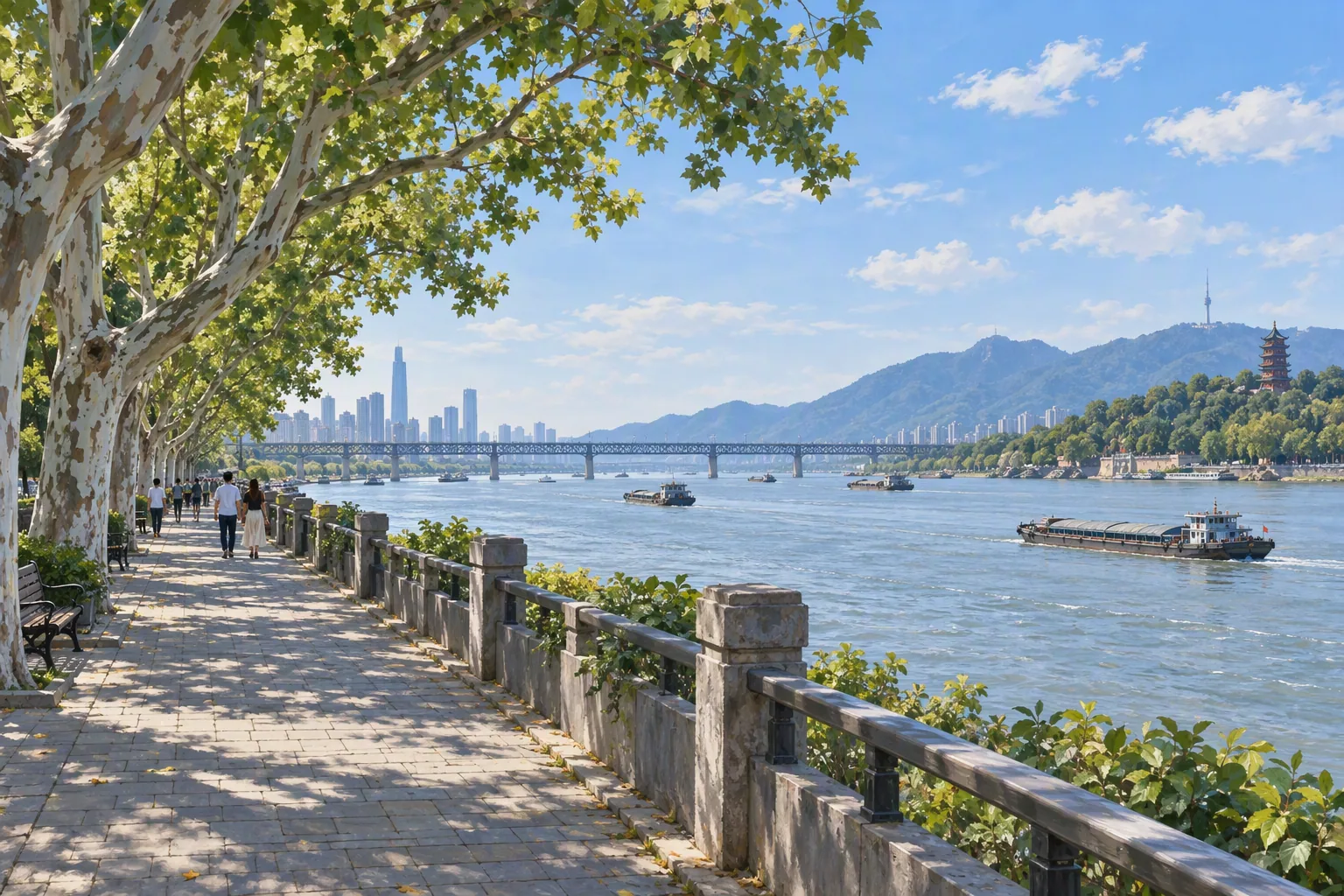
Nanjing plane-tree avenues and Qinhuai River
07 · Food, faith & festivals

Salted duck, river food, and lantern festivals

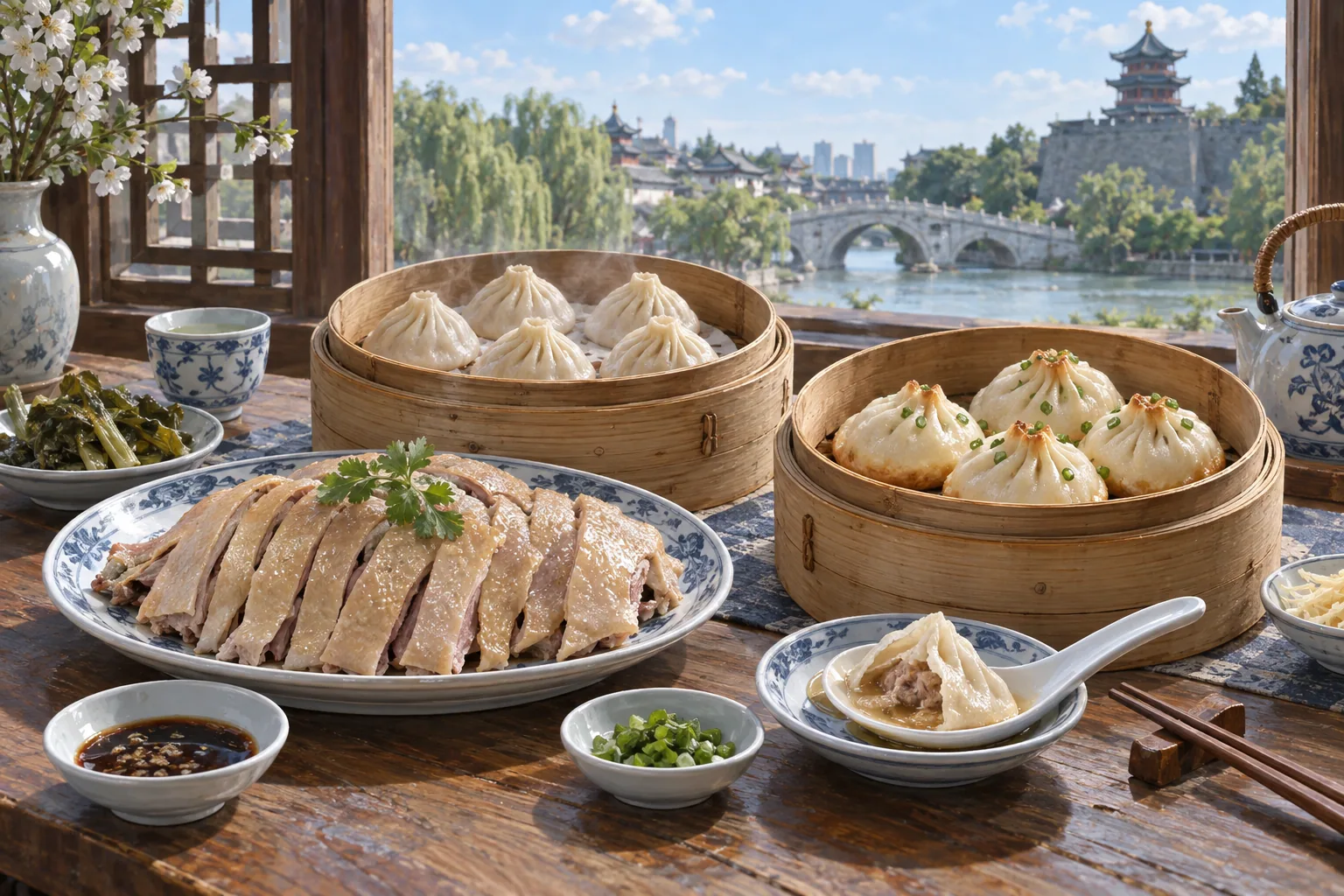
Nanjing's signature is 盐水鸭 (Nanjing salted duck); also try 鸭血粉丝汤 (duck-blood and vermicelli soup), 汤包 (soup dumplings), 皮肚面 (crispy-pork-skin noodles) and the 秦淮 (Qinhuai) street snacks. 清真 (Halal) options exist, including near the 净觉寺 (Jingjue Mosque) — Nanjing's oldest surviving mosque, founded in 1388 under the Hongwu Emperor and later repaired under Zheng He's supervision. Campus canteens are cheap; 美团 / 饿了么 (Meituan / Ele.me) deliver to the gate.

Festivals: the 秦淮灯会 (Qinhuai Lantern Festival, usually Jan–Feb) is the city's signature winter event; 春节 (Spring Festival, late Jan–Feb) shuts campuses for weeks; 端午 (Dragon Boat) brings river races and 中秋 (Mid-Autumn) is observed quietly. Freedom of belief is protected; Buddhist temples 鸡鸣寺 (Jiming Temple) and 栖霞寺 (Qixia Temple) and the mosque welcome respectful visitors — confirm worship arrangements with your international student office.

Nanjing salted duck and Qinhuai snacks
08 · Apps, money & safety

Set up the everyday toolkit in your first days

  • WeChat (微信) — chat and group notices, plus WeChat Pay; universities push announcements here and you scan to pay in canteens and taxis.
  • Alipay (支付宝) — Alipay Pay and transit codes for metro/bus; both apps now accept major international cards for visitors, but keep some cash as backup.
  • 高德地图 / 百度地图 (maps), 滴滴出行 (ride-hailing), 12306 (train tickets), 美团 / 饿了么 (food delivery), and the 南京地铁 app or 我的南京 for local services.
Two rules that are law, not adviceIf you stay anywhere other than a registered hotel or your dorm, register your address with the local police station (派出所) within 24 hours of arrival. X1-visa holders must convert their visa to a student residence permit at the Nanjing Exit–Entry Bureau within 30 days of entry. Keep a photo or scan of your passport, visa and admission notice on your phone. Emergency numbers: police 110, ambulance 120, fire 119, and the Nanjing service hotline 12345.
08