CITY & STUDENT LIFE

Understand Shenzhen before choosing a university

A practical study and living guide for international students — not a collection of slogans.

01 · City & study

From fishing village to tech megacity in forty years

Shenzhen (深圳) became China's first Special Economic Zone in 1980 and grew from a small town into a metropolis of over 17 million in a single generation — one of the fastest urban transformations in history. It is now the country's hardware and innovation capital, home to global technology firms and a dense startup ecosystem. Its universities are young but rising fast: the Shenzhen campus of Harbin Institute of Technology brings a C9 engineering pedigree, while Shenzhen University is a fast-improving municipal flagship. Most institutions cluster in Nanshan district around University Town and the high-tech park, with newer campuses in the east.

  • Good fits: computer science, electronic information, AI, mechanical and materials engineering, architecture, business and design — and plenty of internship exposure to industry.
  • Choosing a university: almost all campuses sit in Nanshan or nearby; confirm the exact address and the metro line, because Shenzhen is a long, narrow city and commuting matters.
  • Living here: a warm coastal climate year-round, a modern and very convenient city, but the highest living costs among the five cities in this guide.
Illustration of studying and living in Shenzhen
A young, fast, coastal city — expect modern campuses and close industry links.
02 · Climate & packing

A warm subtropical coastal climate — hot, humid and green

Shenzhen has a humid subtropical climate with a long, warm summer and a short, mild winter. Summer (May–October) is hot, very humid and wet, with a typhoon season from roughly June to October that can bring heavy rain and occasional disruptions. Winter is brief, mild and mostly dry, rarely cold. Sea breezes soften the heat, and the city stays green all year.

What to packLight, breathable summer clothing and rain gear; a light jacket for the short cool season; mosquito protection; and check typhoon warnings during the rainy season — plan indoor backups for travel.
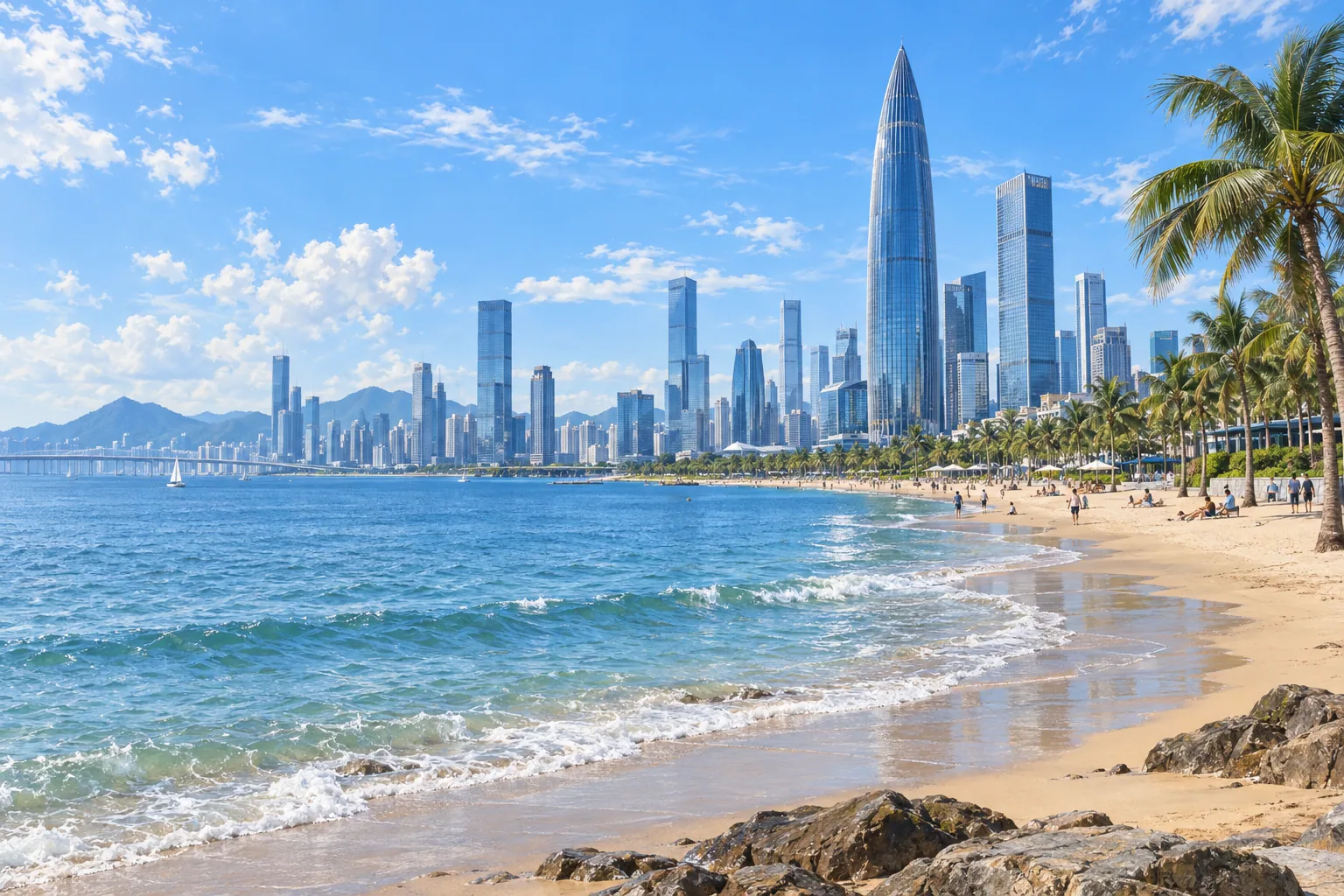
Shenzhen's coastal climate and what to pack
03 · Your first week

Sort the paperwork first, then start exploring

  1. Confirm where and when to register, as stated in your admission notice
  2. Check into your dormitory or complete accommodation registration
  3. Complete the document checks, medical examination and insurance your university requires
  4. Set up your campus card, SIM card, bank card and everyday payment apps
  5. Locate the campus clinic, the international student office and emergency contacts
03
04 · Daily life

A cashless, well-connected city — set up payments first

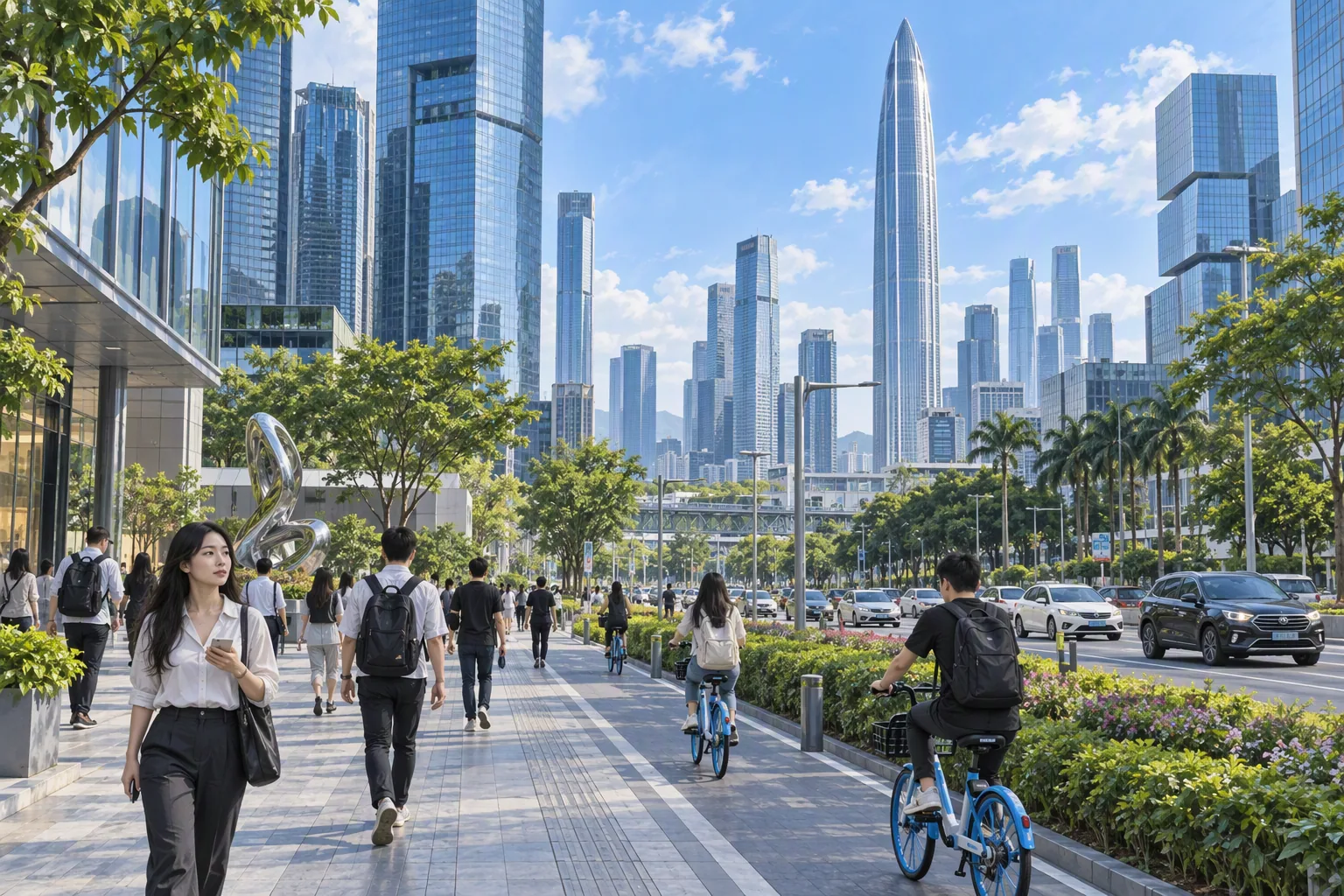
Shenzhen's public transport is excellent: a dense metro, extensive buses and shared bikes, all cashless. Almost everything — canteens, shops, taxis, even small stalls — runs on WeChat Pay or Alipay, so set up mobile payment on day one. The city is modern and convenient, with a strong café and coffee culture and late-night food options. Because it is a city of migrants, English is more common than in many Chinese cities, which can make the first weeks easier.

First-week goalSet up WeChat Pay and Alipay with a card, take one metro trip to a market or mall, find your nearest canteen and café, and save the university's key contacts.
Daily life and commuting in Shenzhen
05 · Budget & housing

The priciest of the five cities — plan your budget carefully

Shenzhen's rents and general living costs are the highest among the cities covered here, though still below some other global tech hubs. On-campus dormitories are by far the best value and are arranged by the university — apply early. Off-campus housing in Nanshan is expensive; nearby districts such as Bao'an or Longgang can be cheaper but add commuting time.

Do not overlookDormitory application deadlines, move-in documents, off-campus accommodation registration, deposit and commute costs, and whether you can stay during holidays.
05
06 · Culture & belonging

A migrant city where almost everyone is from somewhere else

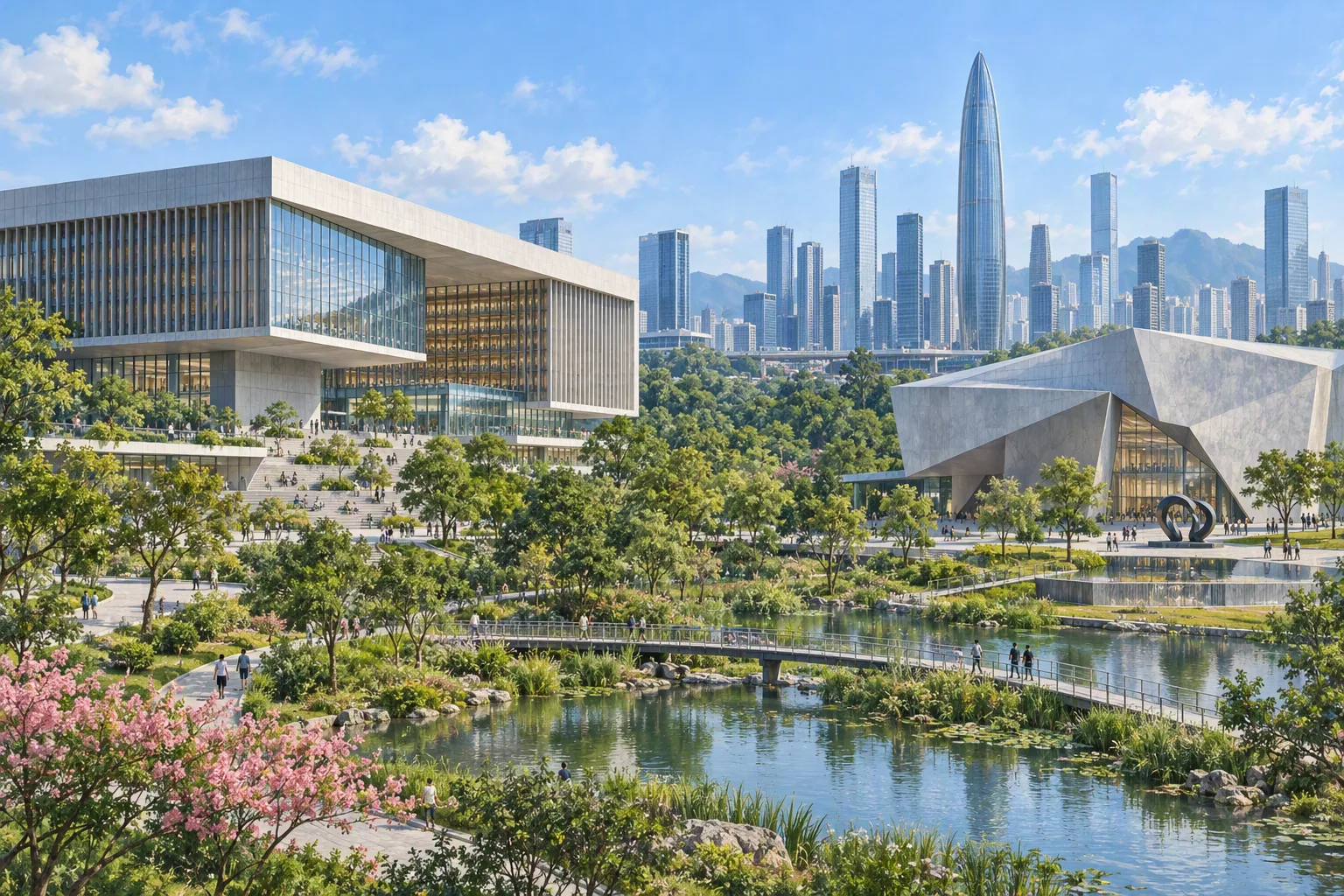
Shenzhen has little of the dynastic history of Xi'an or Nanjing, and that is precisely its character. It is a city of newcomers — people from every province of China and a growing international community — which makes it unusually open to outsiders. The Cantonese heritage of the wider Pearl River Delta is present in the food and in nearby Guangzhou and Hong Kong, China, but Shenzhen's own culture is contemporary: design weeks, art districts such as Dafen Oil Painting Village and OCT-LOFT, museums, a busy seafront, and a strong "get things done" energy. For students, the proximity to industry means internships, hackathons and guest lectures are woven into study.

What this means for youUniversity life in China is more formal than in many countries. Address teachers as "老师 (lǎoshī)" and older students as "学长 / 学姐 (xuézhǎng / xuéjiě)"; punctuality and preparation are noticed; open public criticism is rare, but "face" (面子, miànzi) matters, so feedback is often indirect. Join a 社团 (club) or the 留学生办公室 (international student office) activities early: most of your classmates will be Chinese, and that is where friendships and daily-language practice actually happen.
Shenzhen museums, art districts and seafront
07 · Food, faith & festivals

Cantonese roots, a nationwide menu and 24-hour convenience

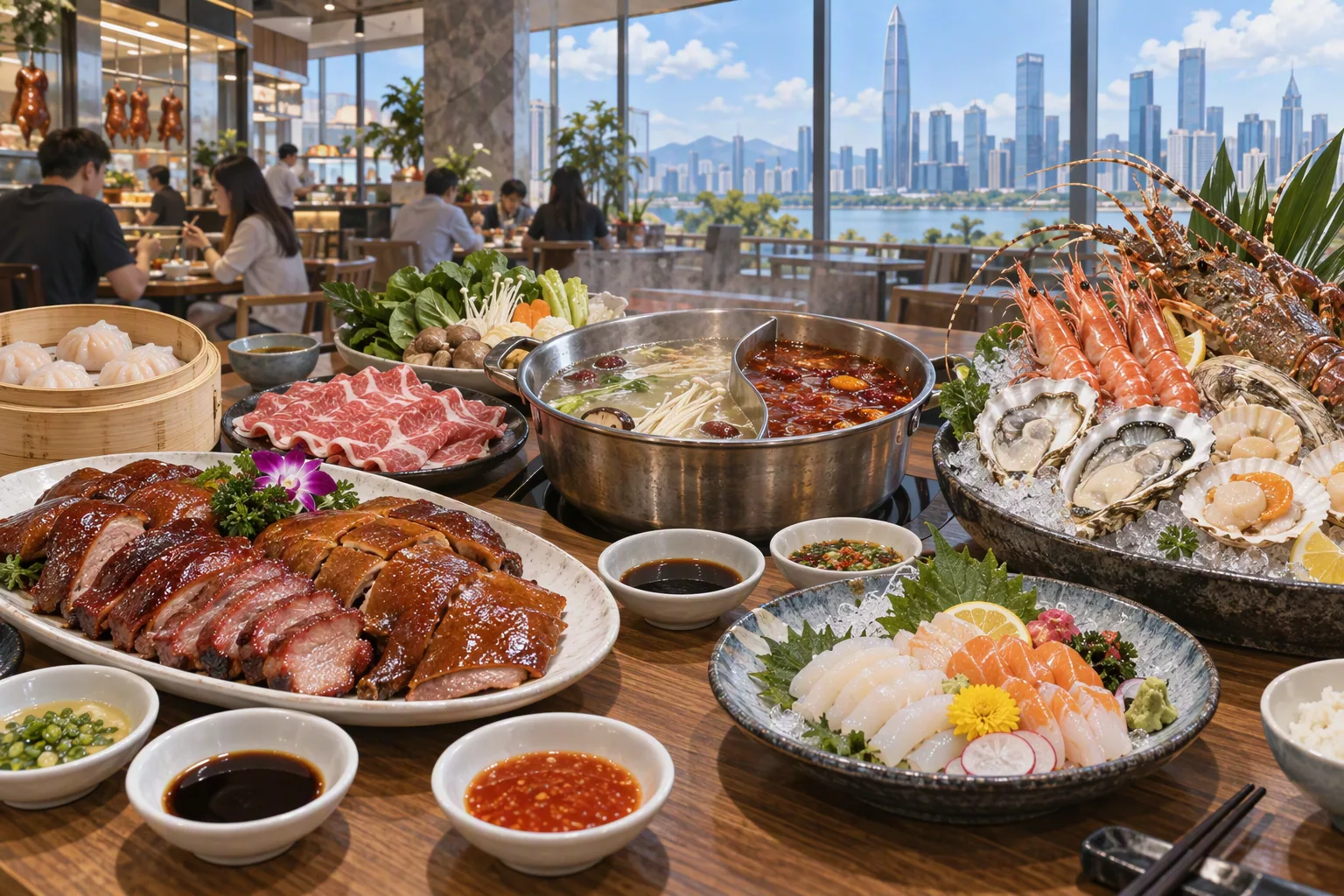
Shenzhen sits at the edge of Cantonese (粤) food culture, so dim sum (点心 / 饮茶), roast meats, rice-noodle rolls and seafood are all easy to find and excellent. But because the population comes from everywhere, the city's food range is one of the widest in China — Sichuan, Hunan, northeastern, northwestern and international restaurants are all common. Halal (清真) restaurants exist, and food delivery runs late. Expect higher prices than inland cities, but also more late-night and international options.

Festivals shape the academic year: 春节 (Spring Festival, usually late January–February) shuts campuses for weeks, so book travel home early; 国庆 (National Day, 1 October) brings a week-long holiday and crowded transport; 中秋 (Mid-Autumn) and 端午 (Dragon Boat) are quieter, the latter marked by dragon-boat races on local waters. Freedom of belief is protected; Shenzhen has mosques, churches and temples serving its diverse population. For any prayer or worship space, confirm arrangements with your international student office rather than assuming.

Shenzhen Cantonese dim sum and diverse food
08 · Apps, money & safety

Set up the everyday toolkit in your first days

  • WeChat (微信) — chat and group notices, plus WeChat Pay; universities push announcements here and you scan to pay in canteens and taxis.
  • Alipay (支付宝) — Alipay Pay and transit codes for metro/bus; both apps accept major international cards for visitors, but keep some cash as backup.
  • 高德地图 / 百度地图 (maps), 滴滴出行 (ride-hailing), 12306 (train tickets), 美团 / 饿了么 (food delivery).
Two rules that are law, not adviceIf you stay anywhere other than a registered hotel or your dorm, you must register your address with the local police station (派出所) within 24 hours of arrival. X1-visa holders must convert their visa to a student residence permit at the Shenzhen Exit–Entry Bureau within 30 days of entry. Keep a photo or scan of your passport, visa and admission notice on your phone. Emergency numbers: police 110, ambulance 120, fire 119, and the Shenzhen service hotline 12345.
08