CITY & STUDENT LIFE

Understand Wuhan before choosing a university

A practical study and living guide for international students — not a collection of slogans.

01 · City & study

A Yangtze crossroads: China's densest student city, split by rivers

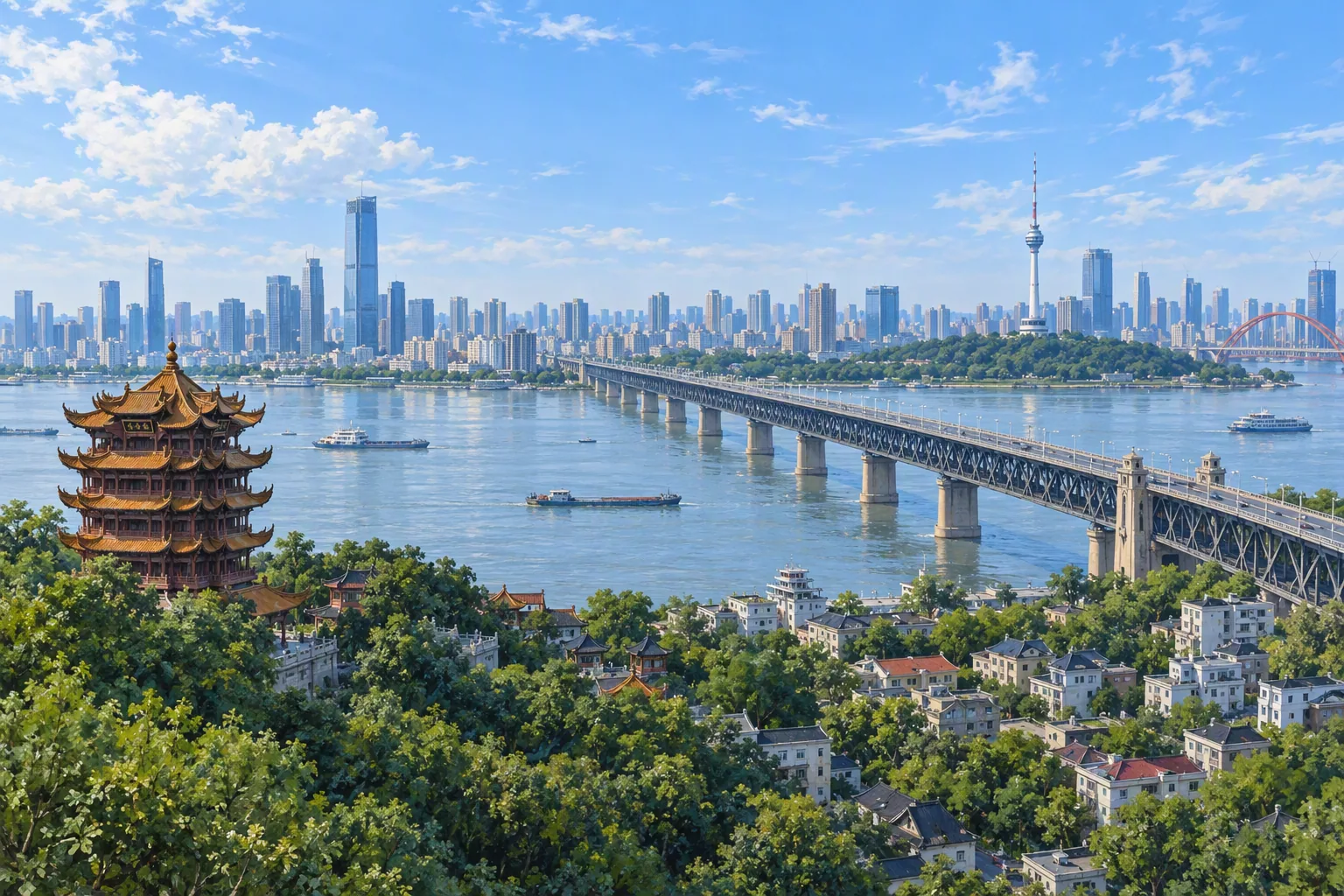
Wuhan (武汉) is the capital of Hubei and the largest city in central China — historically called the "nine-province thoroughfare" (九省通衢) because the Yangtze and Han rivers meet here, making it a natural crossroads of the country. It is also one of China's biggest higher-education centres: roughly 1.3 million students live in the city, spread across the Wuchang, Hankou and Hanyang districts that are divided by the two rivers and connected by bridges and a large metro network. That geography matters: "Wuhan" covers three former cities, and two campuses of the same university system can sit an hour apart.

  • Good fits: comprehensive humanities, law, journalism, surveying and mapping science, hydrology and medicine (Wuhan University and HUST between them cover almost every field).
  • Choosing a university: confirm which district the campus is in — Wuchang's Luojia Hill and East Lake area is the classic student quarter, while the Wuchang/Hongshan university belt around HUST is a newer campus cluster.
  • Living here: summers are famously hot ("one of the 'three furnaces'"), winters are cold and damp with no northern-style central heating, and the city is huge, so local travel needs planning.
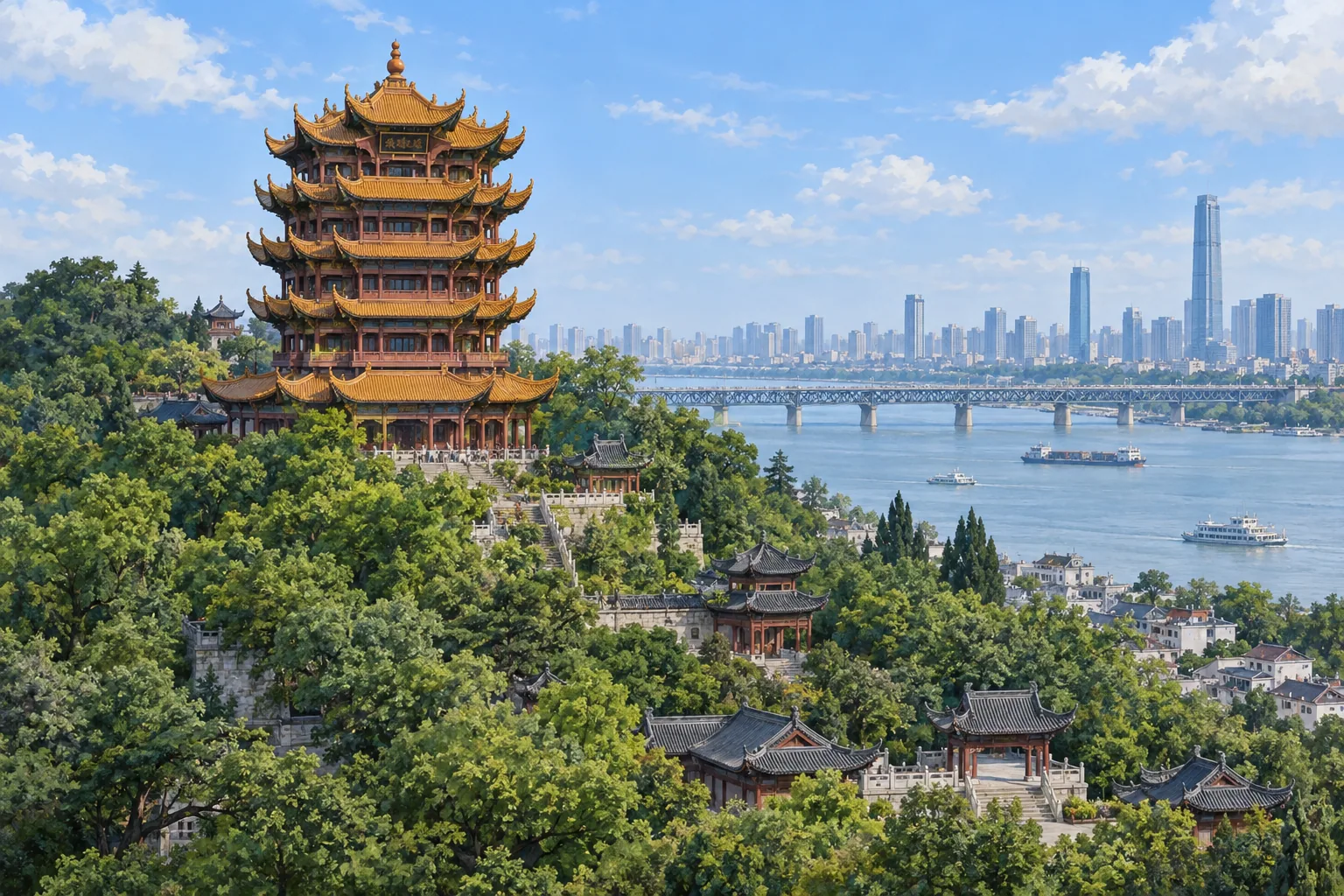
Illustration of studying and living in Wuhan
The Yellow Crane Tower looks over the Yangtze — but your daily life will revolve around one riverbank, not all three.
02 · Climate & packing

Subtropical monsoon: scorching humid summers, cold damp winters

Wuhan has a humid subtropical monsoon climate with four distinct seasons. Summer (June–August) is very hot and humid and often exceeds 35 °C, which is why the city counts among the traditional "three furnaces" (火炉) of China; plum-rain season in early summer brings frequent downpours. Winter (December–February) is cold and damp, typically a few degrees above freezing but felt harder because buildings lack northern-type central heating. Spring and autumn are short but pleasant.

What to packLight, breathable summer clothes and a strong fan or portable cooler; warm layers, a waterproof coat and shoes for the damp winter; an umbrella for plum-rain season; and medicine for humidity-related colds.
Wuhan summer heat and what to pack
03 · Your first week

Sort the paperwork first, then start exploring

  1. Confirm where and when to register, as stated in your admission notice
  2. Check into your dormitory or complete accommodation registration
  3. Complete the document checks, medical examination and insurance your university requires
  4. Set up your campus card, SIM card, bank card and everyday payment apps
  5. Locate the campus clinic, the international student office and emergency contacts
03
04 · Daily life

Learn the metro early — the rivers make the city wide

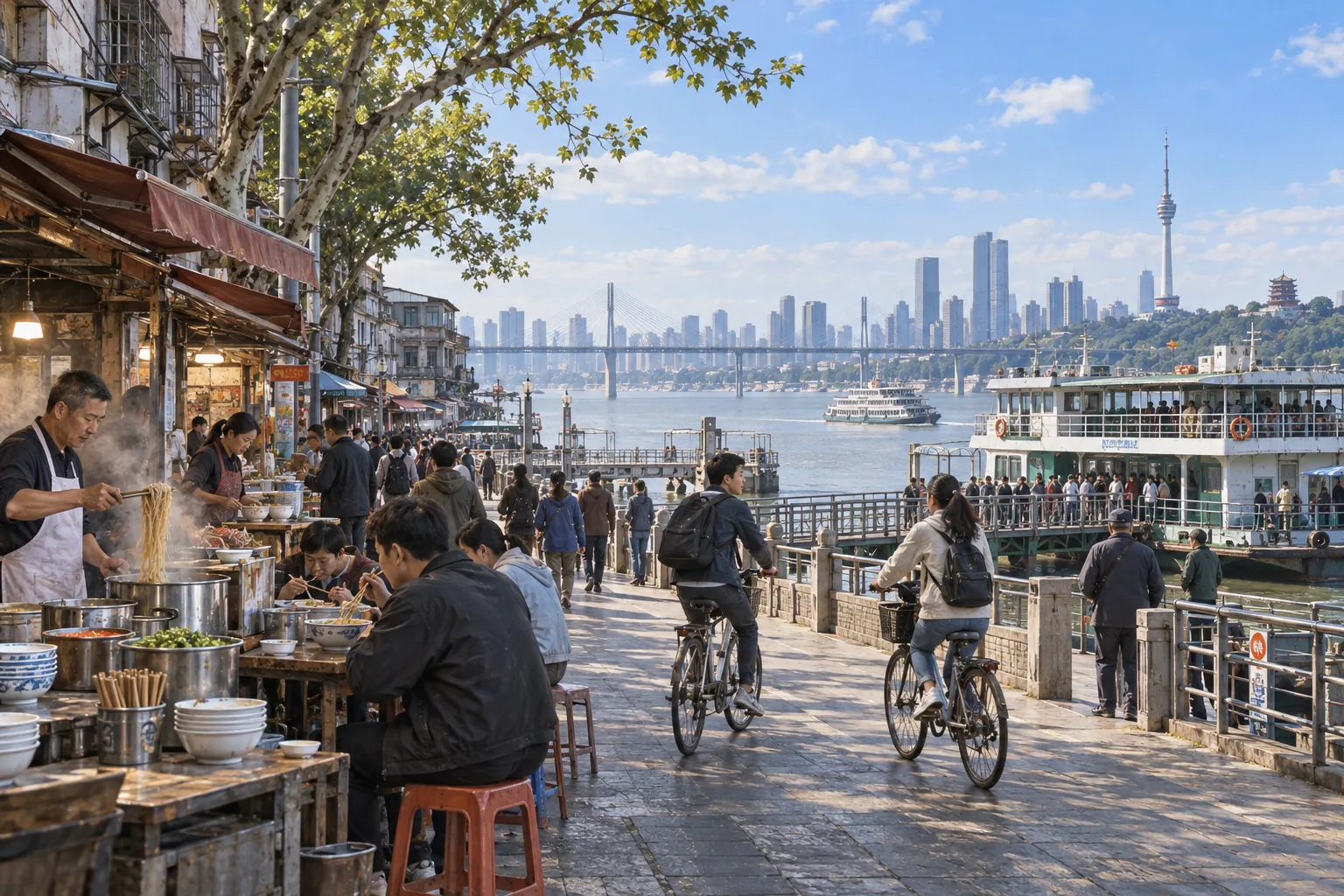
Wuhan's metro is extensive and crosses the rivers, but because the city is built across three districts, a cross-town trip can easily take an hour. Wuhan also has a strong cycling culture and a large shared-bike network, useful for the flat riverside areas. Campus canteens are cheap and busy; local breakfast culture — 热干面 (reganmian, hot dry noodles) eaten standing or on the go — is famously fast, and street breakfast stalls (过早, "guozao") open very early.

First-week goalMake one independent metro trip across a bridge, eat once on campus, buy a transit card or set up a metro QR code, and save the university's key contacts.
Daily commute and student life in Wuhan
05 · Budget & housing

Confirm your housing first, then work out monthly costs

On-campus places, room types and opening dates are arranged by the university. Wuhan's off-campus rents are moderate by Chinese big-city standards, but confirm distance to campus before signing. Once you are admitted, apply for a dormitory early if you want one.

Do not overlookDormitory application deadlines, move-in documents, off-campus accommodation registration, and whether you can stay during holidays.
05
06 · Culture & belonging

A river city with a revolutionary and a scholarly side

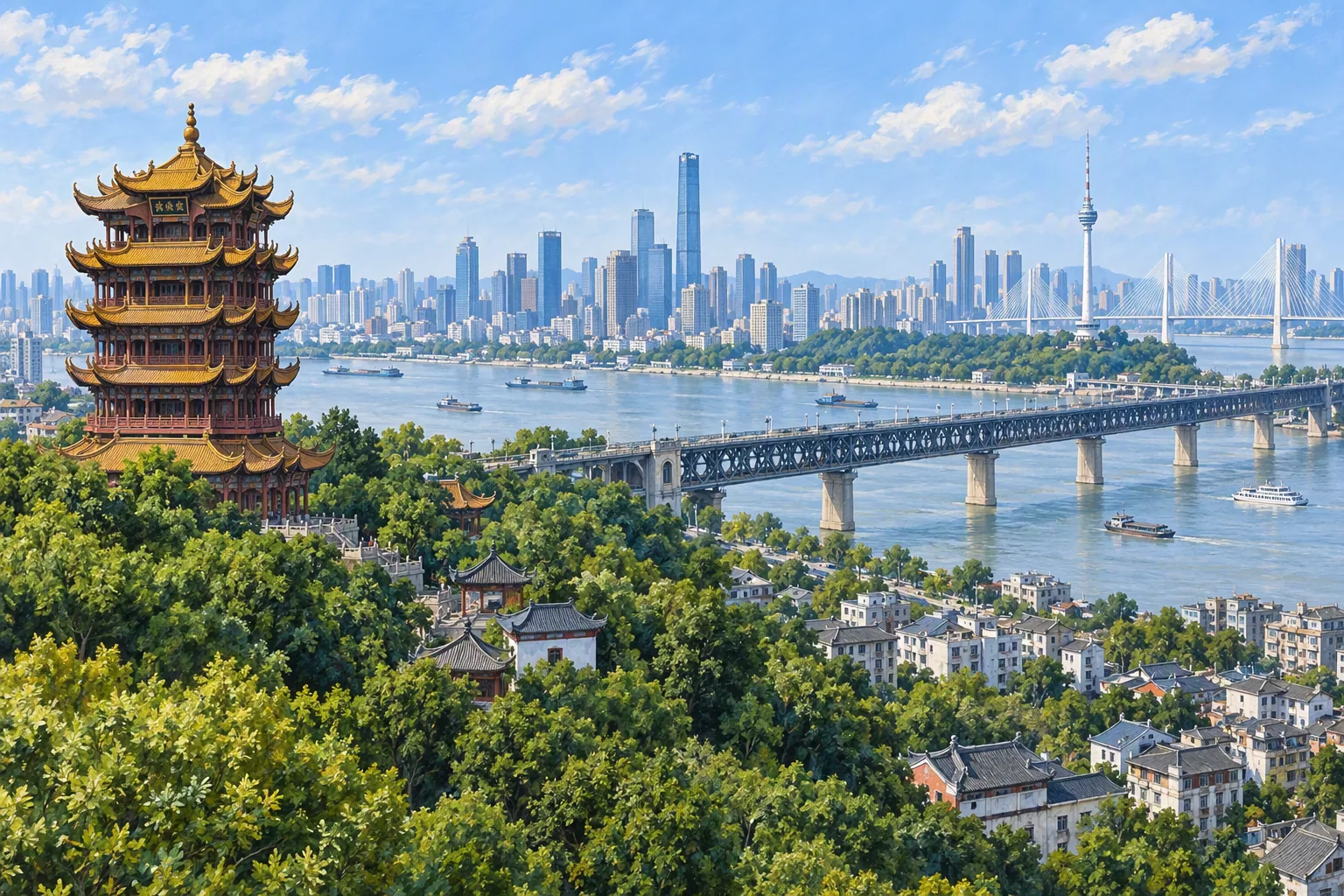
Wuhan's identity is layered. It was the cradle of the 1911 Wuchang Uprising, which ended imperial rule in China — the former military government site on Xinhai Revolution Memorial Square is a landmark. Culturally it is proud of the Yellow Crane Tower (黄鹤楼), one of China's most famous poems-invoking towers, rebuilt on Snake Hill above the Yangtze. And it is a scholarly city: Wuhan University's Luojia Hill campus, with its cherry-blossom season in March, and the East Lake cluster give the city a distinctly student-driven rhythm. Cuisine is robust and "heavy" — strong flavours, plenty of chilli and vinegar.

What this means for youUniversity life in China is more formal than in many countries. Address teachers as "老师 (lǎoshī)" and older students as "学长 / 学姐 (xuézhǎng / xuéjiě)"; punctuality and preparation are noticed; open public criticism is rare, but "face" (面子, miànzi) matters, so feedback is often indirect. Join a 社团 (club) or the 留学生办公室 (international student office) activities early: most of your classmates will be Chinese, and that is where friendships and daily-language practice actually happen.
Wuhan Yellow Crane Tower and cherry blossoms
07 · Food, faith & festivals

Eat early, eat boldly, watch the calendar

Wuhan food is central-Chinese and punchy: 热干面 (reganmian, sesame-paste hot dry noodles), 豆皮 (doupi, pan-fried sticky-rice layers), 莲藕排骨汤 (lotus-root and pork-rib soup), and the city's well-known 鸭脖 (yabo, spicy braised duck neck). Hubei cooking uses freshwater fish, lotus root and chilli freely. Halal (清真) restaurants exist around the city; Buddhist-vegetarian options exist near temples. Campus canteens serve very cheap set meals, and 美团 / 饿了么 deliver widely.

Festivals shape the academic year: 春节 (Spring Festival, usually late January–February) shuts campuses for weeks, so book travel home early; 国庆 (National Day, 1 October) brings a week-long holiday and crowded transport; 中秋 (Mid-Autumn) and 端午 (Dragon Boat) are quieter. Wuhan hosts one of China's largest Dragon Boat festivals on the East Lake. Freedom of belief is protected; the Guiyuan Temple (归元寺) and Baotong Temple welcome respectful visitors. For any prayer or worship space, confirm arrangements with your international student office rather than assuming.

Wuhan food: reganmian and doupi
08 · Apps, money & safety

Set up the everyday toolkit in your first days

  • WeChat (微信) — chat and group notices, plus WeChat Pay; universities push announcements here and you scan to pay in canteens and taxis.
  • Alipay (支付宝) — Alipay Pay and transit codes for metro/bus; both apps accept major international cards for visitors, but keep some cash as backup.
  • 高德地图 / 百度地图 (maps), 滴滴出行 (ride-hailing), 12306 (train tickets), 美团 / 饿了么 (food delivery).
Two rules that are law, not adviceIf you stay anywhere other than a registered hotel or your dorm, you must register your address with the local police station (派出所) within 24 hours of arrival. X1-visa holders must convert their visa to a student residence permit at the Wuhan Exit–Entry Bureau within 30 days of entry. Keep a photo or scan of your passport, visa and admission notice on your phone. Emergency numbers: police 110, ambulance 120, fire 119, and the Wuhan service hotline 12345.
08